
The Commission has presented an EU Action Plan to strengthen the cybersecurity of hospitals and healthcare providers. This initiative is a key priority within the first 100 days of the new mandate, aiming to create a safer and more secure environment for patients.
In 2023 alone, EU countries reported 309 significant cybersecurity incidents targeting the healthcare sector – more than any other critical sector. As healthcare providers increasingly use digital health records, the risk of data-related threats continues to rise. Many systems can be affected, including electronic health records, hospital workflow systems, and medical devices. Such threats can compromise patient care and even put lives at risk.

Personal data of nearly 100,000 individuals that have participated in trainings organized by EU CEPOL has potentially been compromised.
Russia and other hostile states have become increasingly brazen in adopting “gray zone” attacks against Europe and the United States, leaving defense officials with a dilemma: How to respond?

A phishing campaign targeting European companies used fake forms made with HubSpot's Free Form Builder, leading to credential harvesting and Azure account takeover. A phishing campaign targeting European companies used fake forms made with HubSpot's Free Form Builder, leading to credential harvesting and Azure account takeover.
Today, the Commission has opened formal proceedings against TikTok for a suspected breach of the DSA in relation to TikTok's obligation to properly assess and mitigate systemic risks linked to election integrity, notably in the context of the recent Romanian presidential elections on 24 November.

Meta has been fined €251 million (around $263 million) in the European Union for a Facebook security breach that affected millions of users, which the

A Chinese threat actor infiltrated several IT and security companies in a bring-your-own VS code, with an eye to carrying out a supply-chain-based espionage attack.

Meta and X have already paused some AI training over same set of concerns.

The Dutch Data Protection Authority imposed the largest fine yet against facial recognition company Clearview AI under the GDPR.

European regulators said TikTok Lite Rewards potentially caused addictive behavior, and the company failed to provide a risk assessment before launching the program.
EU Member States, with the support of the European Commission and ENISA, the EU Agency for Cybersecurity, published the first report on the cybersecurity and resilience of Europe’s telecommunications and electricity sectors.

How Doppelganger, one of the biggest Russian disinformation campaigns, is using EU companies to keep spreading its propaganda – despite sanctions.
#Fact-checking
A handful cryptographers were asked for feedback on the architecture of the European Identity Wallet (the Architecture Reference Framwork (ARF), currently at version 1.4.0). We seized the opportunity to write a short report to urge Europe to reconsider the design, and to base it on the use of anonymous (aka attribute-based) credentials.
Anonymous credentials were designed specifically to achieve authentication and identification that are both secure and privacy-preserving. As a result, they fully meet the requirements put forth in the eiDAS 2.0 regulation. (The current design does not.) Moreover, they are by now a mature technology. In particular we recommend to use the BBS family of anonymous credentials, which are efficient and mathematically proven secure.

Facebook and Instagram's parent company Meta is pausing its plans to roll our artificial intelligence tools in Europe, following a request from Ireland's Data Protection Commission (DPC), the firm said in a Friday (14 June) blogpost.
Microsoft's education-focused flavor of its cloud productivity suite, Microsoft 365 Education, is facing investigation in the European Union. Privacy
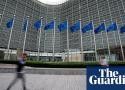
Leaked internal documents have exposed the activities of a Russian state-backed legal defence foundation that European intelligence agencies and analysts say is in fact a Kremlin influence operation active in 48 countries across Europe and around the world.
Internal documents from the Fund for Support and Protection of the Rights of Compatriots Living Abroad (Pravfond) indicate that the foundation finances propaganda websites targeted at Europeans, helped pay for the legal defence of the convicted arms trafficker Viktor Bout and the assassin Vadim Krasikov, and has employed a number of former intelligence officers as the directors of its operations in European countries.

The top European Union cybersecurity official says that disruptive digital attacks have doubled in the 27-member bloc in recent months and election-related services are also being targeted.
Wildly popular social network TikTok approved adverts containing political disinformation ahead of European polls, a report showed Tuesday (4 June), flouting its own guidelines and raising questions about its ability to detect election falsehoods.

At least seven more Russian, Belarusian, Latvian, and Israeli journalists and activists have been targeted with Pegasus within the EU.
Russian military intelligence, the G.R.U., is behind arson attacks aimed at undermining support for Ukraine’s war effort, security officials say.


