
bleepingcomputer.com
By Sergiu Gatlan
January 21, 2026 12:49 PM
Fortinet customers are seeing attackers exploiting a patch bypass for a previously fixed critical FortiGate authentication vulnerability (CVE-2025-59718) to hack patched firewalls.
Fortinet customers are seeing attackers exploiting a patch bypass for a previously fixed critical FortiGate authentication vulnerability (CVE-2025-59718) to hack patched firewalls.
One of the affected admins said that Fortinet has allegedly confirmed that the latest FortiOS version (7.4.10) didn't fully address this authentication bypass vulnerability, which should've been patched in early December with the release of FortiOS 7.4.9.
Fortinet is also reportedly planning to release FortiOS 7.4.11, 7.6.6, and 8.0.0 over the coming days to fully patch the security flaw.
"We just had a malicious SSO login on one of our FortiGate's running on 7.4.9 (FGT60F). We have a SIEM that caught the local admin account being created. Now, I have done a little research, and it appears this is exactly how it looked when someone came in on CVE-2025-59718. But we have been on 7.4.9 since December 30th," the admin said.
The customer shared logs showing that the admin user was created from an SSO login of cloud-init@mail.io from IP address 104.28.244.114. These logs looked similar to previous exploitation of CVE-2025-59718 seen by cybersecurity company Arctic Wolf in December 2025, which reported that attackers were actively exploiting the vulnerability via maliciously crafted SAML messages to compromise admin accounts.
"We observed the same activity. Also running 7.4.9. Same user login and IP address. Created a new system admin user named "helpdesk". We have an open ticket with support. Update: The Fortinet developer team has confirmed the vulnerability persists or is not fixed in v7.4.10," another one added.
BleepingComputer reached out to Fortinet multiple times this week with questions about these reports, but the company has yet to reply.
Until Fortinet provides a fully patched FortiOS release, admins are advised to temporarily disable the vulnerable FortiCloud login feature (if enabled) to secure their systems against attacks.
To disable FortiCloud login, you have to navigate to System -> Settings and switch "Allow administrative login using FortiCloud SSO" to Off. However, you can also run the following commands from the command-line interface:
config system global
set admin-forticloud-sso-login disable
end
Luckily, as Fortinet explains in its original advisory, the FortiCloud single sign-on (SSO) feature targeted in the attacks is not enabled by default when the device is not FortiCare-registered, which should reduce the total number of vulnerable devices.
However, Shadowserver still found over 25,000 Fortinet devices exposed online with FortiCloud SSO enabled in mid-December. At the moment, more than half have been secured, with Shadowserver now tracking just over 11,000 that are still reachable over the Internet.
CISA has also added the CVE-2025-59718 FortiCloud SSO auth bypass flaw to its list of actively exploited vulnerabilities, ordering federal agencies to patch within a week.
Hackers are now also actively exploiting a critical Fortinet FortiSIEM vulnerability with publicly available proof-of-concept exploit code that can enable them to gain code execution with root privileges on unpatched devices.
Back in 2022, Fortinet warned that somebody had a zero day vulnerability and was using it to exploit Fortigate firewalls https://www.fortinet.com/blog/psirt-blogs/update-regarding-cve-2022-40684
Today, Belsen Group publicly released Fortigate firewall configs from just over 15k unique devices:

It affected (before patching) all currently-maintained branches, and recently was highlighted by CISA as being exploited-in-the-wild.
This must be the first time real-world attackers have reversed a patch, and reproduced a vulnerability, before some dastardly researchers released a detection artefact generator tool of their own. /s
At watchTowr's core, we're all about identifying and validating ways into organisations - sometimes through vulnerabilities in network border appliances - without requiring such luxuries as credentials or asset lists.
Delaying security updates and neglecting regular reviews created vulnerabilities that were exploited by attackers, resulting in severe ransomware consequences.
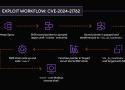
Early this February, Fortinet released an advisory for an "out-of-bounds write vulnerability" that could lead to remote code execution. The issue affected the SSL VPN component of their FortiGate network appliance and was potentially already being exploited in the wild. In this post we detail the steps we took to identify the patched vulnerability and produce a working exploit.

Discover vulnerable FortiGate firewalls with the Bishop Fox CVE-2024-21762 vulnerability scanner. Learn more here!
Chinese state-backed cyber spies gained access to a Dutch military network last year, Dutch intelligence agencies said on Tuesday, calling it part of a trend of Chinese political espionage against the Netherlands and its allies.

A Chinese cyber-espionage group breached the Dutch Ministry of Defence last year and deployed malware on compromised devices, according to the Military Intelligence and Security Service (MIVD) of the Netherlands.

Bishop Fox internally developed an exploit for CVE-2023-27997, a heap overflow in FortiOS—the OS behind FortiGate firewalls—that allows remote code execution. There are 490,000 affected SSL VPN interfaces exposed on the internet, and roughly 69% of them are currently unpatched. You should patch yours now

When Lexfo Security teased a critical pre-authentication RCE bug in FortiGate devices on Saturday 10th, many people speculated on the practical impact of the bug. Would this be a true, sky-is-falling level vulnerability like the recent CVE-2022-42475? Or was it some edge-case hole, requiring some unusual and exotic requisite before any exposure? Others even went further, questioning the legitimacy of the bug itself. Details were scarce and guesswork was rife.


