
politico.eu – POLITICO
March 25, 2026 1:48 am CET
By Zoya Sheftalovich
“Our internal reviews have found no evidence that any devices, networks or systems have been compromised,” POLITICO says in email to staff.
BRUSSELS ― POLITICO launched a security review after a private telephone conversation between one of its reporters and an EU official about issues connected to Hungary and Ukraine was apparently intercepted and the recording published online.
The nine-minute audio clip, from a call that took place on March 3, was uploaded to YouTube on March 16. It has been listened to 5,100 times, according to YouTube data.
“Our internal reviews have found no evidence that any devices, networks or systems have been compromised,” Kate Day, POLITICO’s senior executive editor in Europe, and Carrie Budoff Brown, POLITICO’s executive editor and executive vice president, said in an email to employees on Wednesday.
“We will not be intimidated by an apparent attempt to interfere with independent reporting — nor deterred from the important work we do,” they wrote. “We have always been and will remain vigilant in protecting our sources, supporting the work of our journalists, and maintaining the accuracy of our independent, nonpartisan reporting.”
The issue comes at a time when leaks of confidential EU information are in the spotlight ahead of the Hungarian general election on April 12. In a report on Saturday, the Washington Post said that Viktor Orbán’s government maintained close contacts with Moscow throughout the war in Ukraine, and Hungarian Foreign Minister Péter Szijjártó used breaks during meetings with other member countries to update his Russian counterpart.
A spokesperson for the EU institution where the official works declined to comment on “tapes produced by unknown and anonymous actors.” POLITICO is not identifying the EU official because the call wasn’t on the record.
POLITICO has not been able to determine how the recording may have been obtained and who was responsible for posting it to YouTube.
‘Chilling message’
Several Slovak and Hungarian news websites wrote articles about the recording and published partial transcripts.
“Hacking and the disclosure of journalists’ materials strike at the heart of press freedom and the protections we must be able to rely on as reporters,” said President of the International Press Association in Brussels Dafydd ab Iago. “This is illegal under Belgian law, and it sends a chilling message not only to journalists in Brussels but also to our sources here … The harder question is how to pursue those state actors, whether operating from within the EU or from a third country like Russia.”
On Monday, the Orbán-aligned Hungarian newspaper Mandiner — one of the first outlets that wrote about the conversation — published a separate exchange between independent Hungarian journalist Szabolcs Panyi and a contact. The material was received via a “mysterious email” from an individual identifying himself as “the fourth branch of power,” according to the article’s author.
“We have important stories to tell and work to do and remain focused on maintaining the rigor, independence and purpose that our audience expects from us,” Day and Budoff Brown said in their email.

therecord.media
Suzanne Smalley
January 12th, 2026
Hungary has granted political asylum to Poland's former justice minister, Zbigniew Ziobro, who is being prosecuted for his role in a spyware scandal that has rocked the country.
Hungary has granted political asylum to Poland's former justice minister, Zbigniew Ziobro, who is being prosecuted for his role in a spyware scandal that has rocked the country.
Ziobro is facing dozens of charges for allegedly embezzling money meant for crime victims to pay for spyware used to snoop on the devices of political opponents.
One of the highest profile people implicated in Poland’s sprawling spyware scandal, Ziobro said on X that he intends to accept Hungary’s asylum offer “due to the political persecution in Poland.”
“I have decided to remain abroad until genuine guarantees of the rule of law are restored in Poland,” Ziobro posted. “I believe that instead of acquiescing to being silenced and subjected to a torrent of lies—which I would have no opportunity to refute—I can do more by fighting the mounting lawlessness in Poland.”
Ziobro served as justice minister from 2015 until 2023 and stands accused of helping facilitate a massive spyware operation that current Police Prime Minister Donald Tusk has alleged involved snooping on nearly 600 people.
In September 2024, a Senate commission investigating the scandal said it had found "gross violations of constitutional standards.”
It is unusual for a country within the European Union to offer asylum to a criminal defendant facing prosecution elsewhere in the bloc. Hungarian Prime Minister Viktor Orban is politically aligned with Ziobro, a member of the right-wing Law and Justice (PiS) party, and has his own history with spyware, however.
In December 2024, another former Justice Ministry official, Marcin Romanowski, claimed asylum in Hungary after facing charges for his alleged role in the spyware operation.
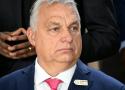
Officials from EU anti-fraud office were allegedly followed, wiretapped and had their laptops hacked by Hungary’s intelligence agency.

On December 30, 2021, in Moscow, Russian Foreign Minister Sergey Lavrov pinned the Order of Friendship on the suit of his Hungarian counterpart Péter Szijjártó. Although the medal was presented by Lavrov, it was Russian President Vladimir Putin himself who decided to award it. Not coincidentally, the medal, which is in the form of a wreath of olive branches encircling a globe, includes the inscription “Peace and Friendship” in Cyrillic on the back, is the highest Russian state decoration that can be awarded to a foreigner.


