| United States Department of Justice
justice.gov
Updated December 10, 2025
Ukrainian National Indicted and Rewards Announced for Co-Conspirators Relating to Destructive Cyberattacks Worldwide
The Justice Department announced two indictments in the Central District of California charging Ukrainian national Victoria Eduardovna Dubranova, 33, also known as Vika, Tory, and SovaSonya, for her role in conducting cyberattacks and computer intrusions against critical infrastructure and other victims around the world, in support of Russia’s geopolitical interests. Dubranova was extradited to the United States earlier this year on an indictment charging her for her actions supporting CyberArmyofRussia_Reborn (CARR). Today, Dubranova was arraigned on a second indictment charging her for her actions supporting NoName057(16) (NoName). Dubranova pleaded not guilty in both cases, and is scheduled to begin trial in the NoName matter on Feb. 3, 2026 and in the CARR matter on April 7, 2026.
As described in the indictments, the Russian government backed CARR and NoName by providing, among other things, financial support. CARR used this financial support to access various cybercriminal services, including subscriptions to distributed denial of service-for-hire services. NoName was a state-sanctioned project administered in part by an information technology organization established by order of the President of Russia in October 2018 that developed, along with other co-conspirators, NoName’s proprietary distributed denial of service (DDoS) program.
“Today’s actions demonstrate the Department’s commitment to disrupting malicious Russian cyber activity — whether conducted directly by state actors or their criminal proxies — aimed at furthering Russia’s geopolitical interests,” said Assistant Attorney General for National Security John A. Eisenberg. “We remain steadfast in defending essential services, including food and water systems Americans rely on each day, and holding accountable those who seek to undermine them.”
“Politically motivated hacktivist groups, whether state-sponsored like CARR or state-sanctioned like NoName, pose a serious threat to our national security, particularly when foreign intelligence services use civilians to obfuscate their malicious cyber activity targeting American critical infrastructure as well as attacking proponents of NATO and U.S. interests abroad,” said First Assistant U.S. Attorney Bill Essayli for the Central District of California. “The charges announced today demonstrate our commitment to eradicating global threats to cybersecurity and pursuing malicious cyber actors working on behalf of adversarial foreign interests.”
“When pro-Russia hacktivist groups target our infrastructure, the FBI will use all available tools to expose their activity and hold them accountable,” said Assistant Director Brett Leatherman of the FBI Cyber Division. “Today’s announcement demonstrates the FBI’s commitment to disrupt Russian state-sponsored cyber threats, including reckless criminal groups supported by the GRU. The FBI doesn’t just track cyber adversaries – we work with global partners to bring them to justice.”
“The defendant’s illegal actions to tamper with the nation’s public water systems put communities and the nation’s drinking water resources at risk,” said EPA Acting Assistant Administrator Craig Pritzlaff. “These criminal charges serve as an unequivocal warning to malicious cyber actors in the U.S. and abroad: EPA’s Criminal Investigation Division and our law enforcement partners will not tolerate threats to our nation’s water infrastructure and will pursue justice against those who endanger the American public. EPA is unwavering in its commitment to clean, safe water for all Americans.”
Cyber Army of Russia Reborn
According to the indictment, CARR, also known as Z-Pentest, was founded, funded, and directed by the Main Directorate of the General Staff of the Armed Forces of the Russian Federation (GRU). CARR claimed credit for hundreds of cyberattacks against victims worldwide, including attacks against critical infrastructure in the United States, in support of Russia’s geopolitical interests. CARR regularly posted on Telegram claiming credit for its attacks and published photos and videos depicting its attacks. CARR primarily hacked industrial control facilities and conducted DDoS attacks. CARR’s victims included public drinking water systems across several states in the U.S., resulting in damage to controls and the spilling of hundreds of thousands of gallons of drinking water. CARR also attacked a meat processing facility in Los Angeles in November 2024, spoiling thousands of pounds of meat and triggering an ammonia leak in the facility. CARR has attacked U.S. election infrastructure during U.S. elections, and websites for U.S. nuclear regulatory entities, among other sensitive targets.
An individual operating as “Cyber_1ce_Killer,” a moniker associated with at least one GRU officer instructed CARR leadership on what kinds of victims CARR should target, and his organization financed CARR’s access to various cybercriminal services, including subscriptions to DDoS-for-hire services. At times, CARR had more than 100 members, including juveniles, and more than 75,000 followers on Telegram.
The CARR indictment charges Dubranova with one count of conspiracy to damage protected computers and tamper with public water systems, one count of damaging protected computers, one count of access device fraud, and one count of aggravated identity theft. If convicted of these charges, Dubranova would face a statutory maximum penalty of 27 years in federal prison.
NoName057(16)
NoName was covert project whose membership included multiple employees of The Center for the Study and Network Monitoring of the Youth Environment (CISM), among other cyber actors. CISM was an information technology organization established by order of the President of Russia in October 2018 that purported to, among other things, monitor the safety of the internet for Russian youth.
According to the indictment, NoName claimed credit for hundreds of cyberattacks against victims worldwide in support of Russia’s geopolitical interests. NoName regularly posted on Telegram claiming credit for its attacks and published proof of victim websites being taken offline. The group primarily conducted DDoS cyberattacks using their own proprietary DDoS tool, DDoSia, which relied on network infrastructure around the world created by employees of CISM.
NoName’s victims included government agencies, financial institutions, and critical infrastructure, such as public railways and ports. NoName recruited volunteers from around the world to download DDoSia and used their computers to launch DDoS attacks on the victims that NoName leaders selected. NoName also published a daily leaderboard of volunteers who launched the most DDoS attacks on its Telegram channel and paid top-ranking volunteers in cryptocurrency for their attacks.
The NoName indictment charges Dubranova with one count of conspiracy to damage protected computers. If convicted of this charge, Dubranova would face a statutory maximum penalty of five years in federal prison.
Concurrent with today’s actions, the U.S. Department of State has offered potential rewards for up to $2 million for information on individuals associated with CARR and up to $10 million for information on individuals associated with NoName. Additionally, today the FBI, CISA, NSA, DOE, EPA, and DC3 issued a Joint Cybersecurity Advisory assessing that pro-Russia hacktivist groups, like CARR and NoName, target minimally secured, internet-facing virtual network computing connections to infiltrate (or gain access to) operational technology control devices within critical infrastructure systems to execute attacks against critical infrastructure, resulting in varying degrees of impact, including physical damage.
On July 19, 2024, U.S. Department of Treasury’s Office of Foreign Assets Control (OFAC) announced sanctions targeting two CARR members, Yuliya Vladimirovna Pankratova and Denis Olegovich Degtyarenko, for their roles in cyber operations against U.S. critical infrastructure. These two individuals were the group’s leader and a primary hacker, respectively.
The FBI Los Angeles Field Office investigated the CARR and NoName cases as part of FBI’s Operation Red Circus, an ongoing operation to disrupt Russian state-sponsored cyberthreats to U.S. critical infrastructure and interests abroad.
Assistant U.S. Attorneys Angela Makabali and Alexander Gorin for the Central District of California and Trial Attorney Greg Nicosia of the National Security Division’s National Security Cyber Section are prosecuting these cases. Assistant U.S. Attorney James E. Dochterman for the Central District of California is handling the forfeiture cases. The Justice Department’s Office of International Affairs provided significant assistance for both investigations.
An indictment is merely an allegation. All defendants are presumed innocent until proven guilty beyond a reasonable doubt in a court of law.

Discover how NoName057(16) targeted 3,700+ hosts across Europe using its DDoSia platform. This in-depth report reveals multi-tiered C2 infrastructure, attack patterns, and strategic geopolitical motivations behind the hacktivist-led campaign.

ictjournal.ch - Pendant des années, le groupe de hackers pro-russe «Noname057(16)» a mené des attaques DDoS contre des serveurs occidentaux, y compris des infrastructures critiques en Suisse. Les autorités judiciaires ont désormais démantelé un botnet du groupe et procédé à des arrestations. Le Ministère public de la Confédération suisse (MPC) a émis trois mandats d’arrêt.
Les autorités judiciaires de plusieurs pays ont mené une opération coordonnée contre le groupe de hackers «Noname057(16)». Lors de l’Action-Day, lancée par Europol après plusieurs années d’enquête, des perquisitions ont eu lieu dans plusieurs pays, selon un communiqué du Ministère public de la Confédération suisse (MPC). Les autorités ont saisi des équipements et arrêté des personnes – tandis qu’en Suisse, «aucun ordinateur impliqué dans le réseau et dans les attaques ni aucune personne domiciliée dans le pays n’ont été identifiés».
Les mesures coordonnées à l’échelle internationale, baptisées Opération Eastwood, ont permis de démanteler un botnet constitué de plusieurs centaines de serveurs répartis dans le monde entier, selon l’Office fédéral de la police criminelle allemande (BKA). Le groupe «Noname057(16)» exploitait ce réseau pour lancer des attaques DDoS, des cyberattaques visant à surcharger délibérément des serveurs.
Trois mandats d’arrêt émis par la Suisse
Le groupe «Noname057(16)» s’est constitué un casier judiciaire conséquent ces dernières années. Le groupe pro-russe se manifeste régulièrement depuis le début de la guerre en Ukraine en mars 2022, indique le MPC. Ce collectif de hackers a mené des attaques DDoS contre de nombreux pays occidentaux qu’il considère comme pro-ukranien. À plusieurs reprises, des serveurs suisses, y compris des infrastructures sensibles, ont été ciblés. Ces attaques interviennent généralement lors d’événements liés à l’Ukraine.
Pour rappel, le groupe hacktiviste a paralysé les sites web du Parlement en été 2023, à l’occasion d’un discours vidéo du président ukrainien Volodymyr Zelensky devant l’Assemblée fédérale. En janvier 2024, les hackers sont redevenus actifs lors de la visite du président ukrainien au Forum économique mondial (WEF). Un an plus tard, les sites de la ville de Lucerne ainsi que de la Banque cantonale vaudoise ont également été ciblés. Des attaques hacktivistes ont aussi eu lieu en juin 2024 lors de la conférence de Bürgenstock pour la paix et pendant le Concours Eurovision de la chanson en mai 2025.
En juin 2023, le Ministère public de la Confédération a ouvert une enquête pénale contre des inconnus pour détérioration de données et contrainte, selon le communiqué. Dans le cadre des investigations internationales coordonnées, plusieurs membres du groupe de hackers ont pu être identifiés dont trois personnes clés présumées. Le MPC a étendu son enquête contre ces derniers et a émis des mandats d’arrêt à leur encontre.
Dans le cadre de l’Action-Day du 15 juillet 2025, les autorités de Suisse et d’Allemagne ont été rejointes par celles des États-Unis, des Pays-Bas, de la Suède, de la France, de l’Espagne et de l’Italie. L’opération a bénéficié du soutien d’Europol, d’Eurojust et d’autres pays européens, précise la police fédérale allemande (BKA). En Suisse, le MPC et l'Office fédéral de la police (Fedpol) ont contribué à l'enquête.
Le MPC considère les résultats de l’opération comme la preuve que «les autorités de poursuite pénale sont aussi en mesure d’identifier des cybercriminels hautement professionnels et d’offrir une protection contre leurs attaques». Le MPC souligne l’importance de la coopération internationale dans la lutte contre la cybercriminalité transfrontalière.

europol.europa.eu - Between 14 and 17 July, a joint international operation, known as Eastwood and coordinated by Europol and Eurojust, targeted the cybercrime network NoName057(16). Law enforcement and judicial authorities from Czechia, France, Finland, Germany, Italy, Lithuania, Poland, Spain, Sweden, Switzerland, the Netherlands and the United States took simultaneous actions against offenders and infrastructure belonging to the pro-Russian cybercrime network. The investigation was also supported by ENISA, as well as Belgium, Canada, Estonia, Denmark, Latvia, Romania and Ukraine. The private parties ShadowServer and abuse.ch also assisted in the technical part of the operation.
The actions led to the disruption of an attack-infrastructure consisting of over one hundred computer systems worldwide, while a major part of the group's central server infrastructure was taken offline. Germany issued six warrants for the arrest of offenders living in the Russian Federation. Two of these persons are accused of being the main instigators responsible for the activities of "NoName057(16)". In total, national authorities have issued seven arrest warrants, which are directed, inter alia, against six Russian nationals for their involvement in the NoName057(16) criminal activities. All of the suspects are listed as internationally wanted, and in some cases, their identities are published in media. Five profiles were also published on the EU Most Wanted website.
National authorities have reached out to several hundred of individuals believed to be supporters of the cybercrime network. The messages, shared via a popular messaging application, inform the recipient of the official measures highlighting the criminal liability they bear for their actions pursuant to national legislations. Individuals acting for NoName057(16) are mainly Russian-speaking sympathisers who use automated tools to carry out distributed denial-of-service (DDoS) attacks. Operating without formal leadership or sophisticated technical skills, they are motivated by ideology and rewards.

Pro-Russian and pro-Palestinian hacktivist groups share a common adversary in France, leading to coordinated cyberattacks against the country.

Russian hackers have targeted canton Schaffhausen and the cities of Geneva and Sierre, paralysing their websites on Wednesday morning.
Hackers targeted around ten official websites in Italy on Saturday, including the websites of the Foreign Ministry and Milan's two airports, putting them out of action temporarily, the country's cyber security agency said.
The pro-Russian hacker group Noname057(16) claimed the cyber attack on Telegram, saying Italy's "Russophobes get a well deserved cyber response".
This post is part of an analysis that I have carried out during my spare time, motivated by a friend that asked me to have a look at the DDosia project related to the NoName057(16) group. The reason behind this request was caused by DDosia client changes for performing the DDos attacks. Because of that, all procedures used so far for monitoring NoName057(16) activities did not work anymore.

The new variant of bots implemented an authentication mechanism to communicate with C2 servers and their proxies. Includes IP address blocklisting, presumably to hinder the tracking of the project.

In the dynamic and rapidly shifting landscape of hacktivism, few entities have managed to capture as much attention as NoName057(16). Once branded as the
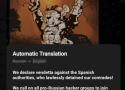
In the wake of Spanish Authorities arresting three individuals associated with NoName057(16), the group declared a "holy war" on Spain. The call to arms encourages all pro-Russian hacker groups to join under the hashtag #FuckGuardiaCivil. Over the past two days, NETSCOUT observed a significant increase in claimed attacks on Spanish websites, coinciding with the call to arms in retaliation for the arrests made. Despite the surge in hacktivist targeting and claims of victory, the daily DDoS attacks manifest as a normal day for Spanish network operators.
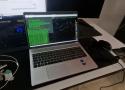
Spanish police arrested three suspected members of the pro-Russian hacker group NoName057(16), known for carrying out distributed denial-of-service (DDoS) attacks against Ukraine’s allies.

Spanish Police arrested three individuals on July 20, 2024, who are suspected of participating in a series of cyberattacks targeting critical infrastructure and government institutions in Spain and other NATO countries.
The detainees are believed to be affiliated with the hacktivist group NoName057(16), known for its pro-Russian ideology and launching DDoS attacks against entities supporting Ukraine in the ongoing conflict.

Les entreprises de transport investissent massivement dans la sécurité contre les cyberattaques, notamment les CFF, ciblés par des hackers russes.

Learn about NoName057(16), a pro-Russian hacktivist group behind Project DDoSia targeting entities supporting Ukraine. Discover an overview of the changes made by the group, both from the perspective of the software shared by the group to generate DDoS attacks and the specifics of the evolution of the C2 servers. It also provides an overview of the country and sectors targeted by the group for 2024.

NoName057(16) relies heavily on HTTPS application-layer DDoS attacks, with many attacks repeatedly sourced from the same attack harness, networks, and targeting similar countries and industries.
Every morning at roughly the same time, a Russian hacker group known as NoName057(16) carries out distributed denial-of-service (DDoS) attacks on European financial institutions, government websites or transportation services.

DDoSia is a DDoS attack toolkit used by the pro-Russia hacktivist group NoName057(16) against countries critical the invasion of Ukraine.

Le groupe d'hacktivistes pro-russe «NoName057(16)» poursuit sans relâche ses attaques contre des serveurs suisses. Voici leur organisation sur Telegram.

In the name of Russia's war in Ukraine, NoName057(16) abuses GitHub and Telegram in an ongoing campaign to disrupt NATO's critical infrastructure.


