| TechCrunch
techcrunch.com
Zack Whittaker
8:50 AM PDT · March 9, 2026
Salt Typhoon is by far one of the most prolific hacking groups in recent years, breaching some of the top American phone companies. Here are all the countries that have been targeted.
Salt Typhoon is behind one of the broadest hacking campaigns in recent years, targeting some of the world’s largest phone and internet companies and stealing tens of millions of phone records about senior government officials.
The hacking group, attributed to China, is part of a wider cluster of hackers with the collective aim of helping China prepare for an eventual war with Taiwan, according to researchers. U.S. officials have called China’s potential invasion of Taiwan an “epoch-defining threat.” Much of the group’s efforts have focused on hacking Cisco routers at the edge of a company’s network to break in and taking control of surveillance devices that U.S. telecom companies are legally required to install to allow law enforcement to monitor calls and messages.
While Salt Typhoon is focused on hacking telecom infrastructure, other China-hacked groups like Volt Typhoon are prepositioning for destructive cyberattacks capable of causing widespread disruption, and Flax Typhoon runs a botnet of hijacked internet-connected devices for hiding the hackers’ malicious internet traffic.
But Salt Typhoon is by far one of the most prolific hacking groups in recent years, including targeting some of the top American phone companies.
The hacks allowed China to obtain call records, text messages, and captured phone audio from senior U.S. officials, many of whom were considered government targets of interest. This prompted the FBI to urge Americans to switch to end-to-end encrypted messaging apps, fearing that a foreign adversary could eavesdrop on their communications.
Salt Typhoon went even further, hacking at least 200 companies around the world, according to FBI officials. The list of affected countries keeps growing.
Here are the countries that have attributed hacks to Salt Typhoon.
United States
Some of the top U.S. phone companies, including AT&T and Verizon, were confirmed hacked by Salt Typhoon, as was internet provider CenturyLink (now Lumen). T-Mobile said it was targeted but that the hackers had no access to its customers’ calls, text messages, or voicemails.
Satellite communications giant Viasat was also compromised, allowing hackers to gain access to tools used by law enforcement to access the communications of others.
Internet and data providers Charter Communications (Spectrum) and Windstream were also named as Salt Typhoon victims. Fiber network giant Consolidated Communications was reportedly hacked as part of the campaign.
The hackers didn’t just target phone and internet providers. Per several reports, Salt Typhoon compromised the networks of a U.S. state’s National Guard, allowing them to steal data and access to other networks in every other U.S. state and several territories.
North and South America
According to security firm Recorded Future, its researchers have seen Salt Typhoon target Cisco devices associated with universities in Argentina and Mexico and elsewhere.
Meanwhile, the Canadian government confirmed that its top telecommunications firms were hacked by China as part of Salt Typhoon’s extended espionage campaign. Canada also confirmed several Cisco routers at one telecom giant were hacked to steal data from the company.
The government in Ottawa warned it saw targeting of companies that were “broader than just the telecommunications sector.”
Trend Micro said it saw Salt Typhoon activity in Brazil, the most populous country in South America.
Asia, Africa, and Oceania
Recorded Future said it’s seen Salt Typhoon targeting at least one Myanmar-based telecoms provider, Mytel, by way of hacked Cisco routers, as well as a South African telecommunications provider. It’s also seen attacks targeting routers of universities across Bangladesh, Indonesia, Malaysia, and Thailand.
Japan has also warned of the threat of Salt Typhoon to its networks.
Both the governments of Australia and New Zealand say they’ve seen Salt Typhoon activity in their telecom and critical infrastructure sectors. New Zealand said it also saw Salt Typhoon hackers across the government sector, as well as transportation, lodging, and military infrastructure networks.
Trend Micro also said it found at least 20 compromised organizations across the telecoms, consulting, chemical, and transportation industries, as well as government agencies and nonprofits in various countries, including Afghanistan, Eswatini, India, Taiwan, and the Philippines.
Europe
The British government has confirmed that a “cluster of activity” from Salt Typhoon was seen across the United Kingdom. While the activity wasn’t specified, news reporting suggests that senior U.K. government staff may have had their phone records tapped and text messages read.
Norway has also confirmed Salt Typhoon hacked several organizations in the country.
Dutch authorities in the Netherlands say that several smaller internet providers and web hosts were targeted and had access to routers, but their internal networks were not compromised.
An Italian internet provider was hacked, per Recorded Future.
And, according to Czech cybersecurity officials, incidents related to Salt Typhoon hacks have been witnessed in Finland and Poland.

| The Record from Recorded Future News
therecord.media
Alexander Martin
February 6th, 2026
Norwegian intelligence discloses country hit by Salt Typhoon campaign
Norway’s domestic security agency confirmed Friday that the Chinese state-sponsored espionage campaign tracked as Salt Typhoon compromised network devices in Norwegian organizations.
The disclosure was made in the Norwegian Police Security Service’s (PST) annual threat assessment for 2026. The agency’s director general, Beate Gangås, said Norway was “facing its most serious security situation since World War II,” citing pressure from multiple foreign intelligence services.
Salt Typhoon is the name U.S. and allied authorities use for a Chinese cyber espionage campaign that has focused heavily on breaching telecommunications and other critical infrastructure. In its report, PST said the actor has exploited vulnerable network devices in Norway.
Gangås said foreign states — particularly China, Russia and Iran — are “conducting intelligence operations and employing hybrid tactics in Norway to undermine our resilience,” stressing the “vital” need for stronger protective security, intelligence and situational awareness.
The assessment said Chinese security and intelligence services have strengthened their ability to operate in Norway, including through cyber operations and human intelligence collection, adding that “the primary intelligence threat from China is in the cyber domain.”
China is described as posing a “substantial” threat and is expected to continue improving its efforts to collect intelligence and map Norwegian digital infrastructure.
PST also warned that China is “systematically” exploiting collaborative research and development projects to bolster its own military capacity and security capabilities.
Salt Typhoon has been linked to significant breaches of telecommunications providers and other critical infrastructure abroad. U.S. officials have said the campaign allowed attackers to intercept communications linked to senior political figures during the 2024 presidential race, including Donald Trump and JD Vance.
Last year, more than a dozen allied countries issued a joint advisory blaming three Chinese technology companies for enabling the espionage campaign, saying the intrusions were used to track the communications and movements of specific targets.
While China dominates the cyber threat picture, PST said Russia remains the principal overall threat to Norway’s security. The agency cited sustained espionage, mapping of critical infrastructure, pressure on Ukrainian refugees, covert intelligence operations using civilian vessels and the risk of sabotage.
Russian intelligence has been “closely monitoring military targets and allied activities and capabilities in Norway for many years,” the report said, adding that the tense geopolitical situation in Europe is likely to drive increased activity.
PST said it expects that to include more Russian cyber operations, influence campaigns and attempts to recruit sources via digital platforms in 2026, describing cyber activity as an integral part of Moscow’s broader intelligence effort alongside traditional espionage and influence work.
“The tense geopolitical situation in Europe means that Russian intelligence has several areas of interest in relation to Norway and other NATO countries. Given the increase in military targets on Norwegian soil, the stronger allied presence, and additional military exercises, we anticipate heightened activity from Russian intelligence services,” the agency added.
Iranian intelligence services are also expected to carry out intelligence and influence operations in Norway, the PST said, warning the regime may attempt to target Western interests through property damage, targeted assassinations, terrorist acts or destructive cyber operations.
The PST said the assessment underlines the need for closer cooperation between authorities and the private sector, particularly operators of critical infrastructure, as foreign intelligence services increasingly combine cyber operations with more traditional espionage and influence campaigns.
WASHINGTON, July 15 (Reuters) - A U.S. state's Army National Guard network was thoroughly hacked by a Chinese cyberespionage group nicknamed "Salt Typhoon," according to a Department of Homeland Security memo.
The memo obtained by Property of the People, a national security transparency nonprofit, said the hackers "extensively compromised" the unnamed state Army National Guard's network between March and December 2024 and exfiltrated maps and "data traffic" with counterparts' networks in "every other US state and at least four US territories."
he National Guard and the Department of Homeland Security's cyber defense arm, CISA, did not immediately return messages. News of the memo was first reported by NBC News.
Salt Typhoon has emerged as one of the top concerns of American cyber defhen Coatesenders. U.S. officials allege that the hacking group is doing more than just gathering intelligence; it is prepositioning itself to paralyze U.S. critical infrastructure in case of a conflict with China. Beijing has repeatedly denied being behind the intrusions.
The memo, which said it drew on reporting from the Pentagon, said that Salt Typhoon's success in compromising states' Army National Guard networks nationwide "could undermine local cybersecurity efforts to protect critical infrastructure," in part because such units are often "integrated with state fusion centers responsible for sharing threat information—including cyber threats."

spycloud.com
We analyzed the VenusTech and Salt Typhoon data leaks to uncover the latest trends in the Chinese criminal underground.
In late May, two particularly interesting Chinese datasets appeared for sale in posts on DarkForums, an English-language data breach and leak forum that has become popular since BreachForums went dark in mid-April. These two posts, which we’re calling the VenusTech Data Leak and the Salt Typhoon Data Leak, had some interesting similarities. Both posts:
Were posted by new accounts that appear to have been created explicitly to sell a single dataset
Included data that allegedly came from companies in China’s large hack-for-hire ecosystem
Included data samples that, while limited, give us some insight into the companies they came from
While the samples provided on DarkForums were relatively small in comparison to previous data leaks of a similar nature (including Chinese IT contractor leaks, such as TopSec and iSoon), the latest leaks provide critical pivot points for assessing the state and structure of the Chinese cybersecurity contractor ecosystem.
We wanted to take a moment to analyze these two recent posts, dive into the sample data, and make some connections between this activity and some overall trends we are observing in our research into the Chinese cybercriminal underground.
Analysis of the VenusTech Data Leak
VenusTech is a major IT security vendor in China with a focus on serving government clients. It was founded in 1996 and is traded on the Shenzhen Stock Exchange. They have previously documented ties to the hack-for-hire industry including procuring services from XFocus, who created the original Blaster worm in 2003, as well as providing startup funding to Integrity Tech, the company responsible for the offensive hacking activity associated with Flax Typhoon.
On May 17, a post relating to VenusTech was created by an account called “IronTooth” and titled “Chinese tech company venus leaked documents.” The IronTooth account appears to have been newly created and simply uses the default profile image for DarkForums. The full post text reads:
selling sourced leaked documents dump of chinese tech company. includes papers, products sold to government, accesses, clients and more random shit sold to highest bidder after 48h. crossposted.
nextgov.com - July 9, 2025 09:30 AM ET
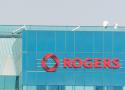
Rogers is Canada’s top wireless provider and is among that nation’s core telecom firms mandated to comply with Canadian lawful access rules, which require them to share user data with investigators.
Canadian telecom and mass media provider Rogers Communications was identified as a firm ensnared by a major Chinese hacking group that has targeted dozens of communications firms worldwide, according to two people familiar with the matter.
The group, known as Salt Typhoon, was discovered inside a batch of American telecom operators last year and first brought to light by the Wall Street Journal in late September. The campaign likely began around two to three years ago and has expanded rapidly since.
It’s not immediately clear what data, assets or other information were pilfered from Rogers networks. The people spoke on the condition of anonymity because the matter is sensitive.
“These allegations are false. We were not compromised by Salt Typhoon and this has been verified by two independent cyber security firms. As part of ongoing work, we partner with government and industry to proactively monitor and investigate potential threats,” a company spokesperson said.
"It’s important to note that if the Cyber Centre is aware of cyber threat activity in Canada, we alert the organization and provide mitigation support, advice and guidance," a spokesperson for the Canadian Centre for Cyber Security said, noting that they do not comment on specific or alleged cyber incidents but pointing to advisories they have issued about the threat posed by Salt Typhoon.
"Through the Canadian Security Telecommunications Advisory Committee (CSTAC), the Cyber Centre and its government partners regularly and actively engage with Canadian telecommunications service providers and key equipment suppliers to help ensure the security of Canadian critical telecommunications infrastructure," they said.
Rogers is the country’s top wireless provider and boasts some 20 million subscribers across its various services, a company webpage says. Over 60% percent of Canadian households rely on its internet, it notes. It also has extensive contracts with Canada’s government.
Canada, like many countries with robust telecom networks, has laws that let federal investigators compel providers to turn over communications metadata on individuals suspected of criminal activity, hacking or espionage. Rogers is among those required to comply with these Canadian “lawful access” inquiries.
In 2023, the company disclosed data on some 162,000 customers to authorities under lawful access requests backed by warrants and government orders, a transparency report shows.
Salt Typhoon has gone after those same wiretap environments in the U.S., and likely abused those platforms when it directly targeted the communications of President Donald Trump and Vice President JD Vance during their run for the White House last year.
Last month, Canada’s cybersecurity agency released a bulletin warning that Salt Typhoon was targeting telecommunications firms in the country. “Three network devices registered to a Canadian telecommunications company were compromised by likely Salt Typhoon actors in mid-February 2025,” says the bulletin, which doesn’t name the firm.
The agency identified a 2023 vulnerability in Cisco routers that was used as an access point into the unnamed Canadian provider. Cisco equipment that has not been patched with the latest security updates has provided the Chinese telecom hackers with a wide access point into various communications systems, according to earlier assessments.
That same 2023 vulnerability is detailed in a Cisco threat intelligence blog released in February.

Cisco Talos has been closely monitoring reports of widespread intrusion activity against several major U.S. telecommunications companies, by a threat actor dubbed Salt Typhoon. This blog highlights our observations on this campaign and identifies recommendations for detection and prevention.
Between December 2024 and January 2025, Recorded Future’s Insikt Group identified a campaign exploiting unpatched internet-facing Cisco network devices primarily associated with global telecommunications providers. Victim organizations included a United States-based affiliate of a United Kingdom-based telecommunications provider and a South African telecommunications provider. Insikt Group attributes this activity to the Chinese state-sponsored threat activity group tracked by Insikt Group as RedMike, which aligns with the Microsoft-named group Salt Typhoon. Using Recorded Future® Network Intelligence, Insikt Group observed RedMike target and exploit unpatched Cisco network devices vulnerable to CVE-2023-20198, a privilege escalation vulnerability found in the web user interface (UI) feature in Cisco IOS XE software, for initial access before exploiting an associated privilege escalation vulnerability, CVE-2023-20273, to gain root privileges. RedMike reconfigures the device, adding a generic routing encapsulation (GRE) tunnel for persistent access.
Salt Typhoon, a state-sponsored actor linked to the People’s Republic of China, has breached at least nine U.S.-based telecommunications companies with the intent to target high profile government and political figures. Tenable Research examines the tactics, techniques and procedures of this threat actor.
More U.S. companies have been added to the list of telecommunications firms hacked in a wave of breaches by a Chinese state-backed threat group tracked as Salt Typhoon.
The White House said Friday the Salt Typhoon breach occurred in large part due to failures at telecom companies to protect their systems.

Senators briefed on the wide-ranging breaches by Chinese hackers called for action on Wednesday to protect the country's telecommunications networks.
Leaders of the big telecommunications companies were summoned to the White House to discuss strategies for overhauling the security of the nation’s telecommunications networks amid growing alarm at the scope of a Chinese hack.
T-Mobile confirms it was hacked in the wave of recently reported telecom breaches conducted by Chinese threat actors to gain access to private communications, call records, and law enforcement information requests.

China-linked threat actors compromised some U.S. internet service providers as part of a cyber espionage campaign code-named Salt Typhoon.
The state-sponsored hackers aimed at gathering intelligence from the targets or carrying out disruptive cyberattacks.
The Wall Street Journal reported that experts are investigating into the security breached to determine if the attackers gained access to Cisco Systems routers, which are core network components of the ISP infrastructures.


